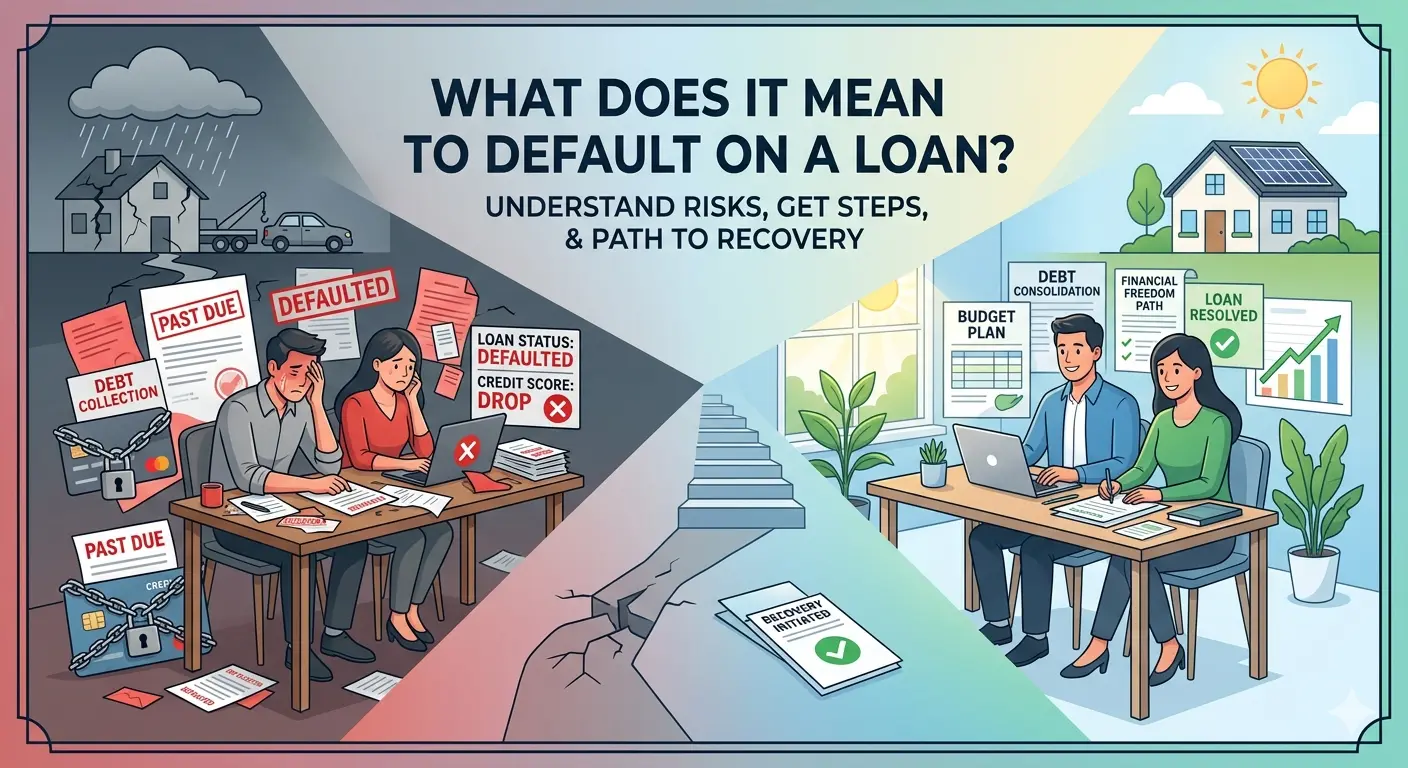
Many people face financial hardship every day. Consequently, when money gets tight, missing a payment becomes a real fear. You might be asking yourself, what does it mean to default on a loan? Therefore, this complete guide will explain everything you need to know. Specifically, we will cover the risks, the legal process, and how to recover. Financial terms can be very confusing for beginners. However, understanding them is the first step toward true financial freedom. For more basic tips, check out our complete guide on creating a monthly budget.
Understanding What Does It Mean to Default on a Loan
Failing to repay borrowed money is a serious issue. Indeed, it violates the original agreement you signed with a lender. When you stop making payments, your account status changes drastically. Furthermore, the bank will start taking protective measures.
Missing a Payment vs. Loan Default
Missing a single payment does not automatically trigger severe actions. Instead, a late payment is usually just an early warning sign. Most lenders offer a helpful grace period for a few days. If you pay within this window, you only face a small late fee.
On the other hand, a loan default occurs when you fail to pay for a much longer period. Ultimately, the timeline depends entirely on the type of debt you have. It is definitely not an overnight process. Before taking drastic measures, lenders will try to contact you many times.
How Banks Track Missed Payments
Banks use highly automated systems to monitor every single account. Therefore, they know exactly when a due date passes. As soon as you miss a deadline, a digital flag goes up. Following this, the automated system triggers reminder emails and text messages. If you ignore these alerts consistently, human representatives will eventually take over the collection process.
Timelines for Different Types of Debt Defaults
Not all debts are treated the exact same way. In fact, different lenders follow widely different legal guidelines. Here is a detailed breakdown of common timelines you might face.
Federal Student Loan Default Rules
Student debt has very specific and unique rules. Generally, you are officially in trouble if you miss payments for 270 days. This is a very long period compared to other everyday debts. During this waiting time, your account is merely considered delinquent. If you want to fully understand what does it mean to default on a loan regarding student debt, know that recovery takes time. Fortunately, you have many months to contact your servicer and find a solution.
Private Educational Financing Default
Private student lenders operate differently than the government. Usually, they are much stricter with their repayment terms. Sometimes, they declare an account bad after just 90 days of non-payment. Therefore, you must read your specific contract very carefully. Otherwise, you might be caught off guard by sudden penalty fees.
Mortgages and Home Foreclosure
Your home is usually your most valuable physical asset. Consequently, missing a mortgage payment is extremely risky. Most banks give you a standard 15-day grace period. After 30 days, the late payment hits your permanent credit report. If you reach 120 days of non-payment, the bank starts the foreclosure process. As a result, you could lose your family home completely.
Auto Financing and Vehicle Repossession
Car agreements are tied directly to your specific vehicle. Because of this, the rules here are usually much stricter. Some lenders can take legal action after just one single missed payment. Typically, you have 30 to 90 days before things get severe. If you fail to pay, the lender will certainly repossess your car. Afterward, they will sell it at an auction to cover their financial losses.

Credit Cards and Unsecured Debt Defaults
Unsecured debts do not have any physical collateral tied to them. For example, credit card companies cannot take your house or car directly. Usually, a credit account goes bad after 180 days of missed payments. At this critical point, the company will permanently close your account. Subsequently, they will charge off the debt and send it to a collection agency.
Major Consequences of Defaulting on Debt
Ignoring your financial obligations leads to severe negative outcomes. Moreover, it affects many different areas of your daily life. You must know these risks to protect your future properly.
Severe Credit Score Damage
Your credit score is vital for your overall financial health. Specifically, payment history makes up the largest part of this important number. A major negative mark will drop your score by dozens of points. Sadly, this negative mark stays on your credit report for up to seven long years. Consequently, a low score makes it very hard to rent a nice apartment.
Aggressive Collection Efforts
Lenders will eventually give up trying to collect the money themselves. Afterward, they will sell your account to a third-party debt collector. These agencies are often very aggressive and persistent. For instance, they will call your personal phone constantly. They will also send many demanding letters to your home address. Dealing with debt collectors is extremely stressful for absolutely anyone.
Potential Legal Action for Debt Default
A debt collector can legally take you to civil court. If they win a lawsuit against you, the judge issues a legal judgment. This ruling grants them additional powers to collect the money. Therefore, ignoring lawsuit notices is the worst thing you can possibly do. Always seek legal advice if you receive official court papers.
Wage Garnishment Explained
Following a successful lawsuit, collectors can target your personal income. This allows them to take money directly from your paycheck. In legal terms, this strict action is called wage garnishment. Furthermore, they can sometimes take money straight out of your bank account. This leaves you with very little cash to survive on.
The Impact on Loan Co-Signers
Sometimes, a family member co-signs a contract for you. Unfortunately, defaulting on debt ruins their financial life too. The bank will hold them equally responsible for the entire missing balance. As a result, their credit score will drop just as fast as yours. This situation often destroys important family relationships permanently.
Best Strategies to Prevent Loan Default

You should never wait until it is too late to act. Taking early action is the best way to protect yourself. Fortunately, there are several extremely good strategies you can use today.
Communicate with Your Lender Early
Never ignore phone calls or letters from your local bank. Instead, call them the very moment you realize you cannot pay. Surprisingly, lenders actually want to help you succeed. It costs them a lot of money to send accounts to external collections. Thus, they might offer a temporary pause on your monthly payments. This helpful option is often called forbearance or deferment.
Look into Refinancing Options
You might be struggling simply because your interest rate is too high. Refinancing means replacing your current debt with a brand new one. Ultimately, the main goal is to secure a much lower monthly payment. This makes your personal budget much easier to manage. You can easily check rates with local credit unions or online platforms.
Seek Professional Credit Counseling
Sometimes you need expert help to manage your monthly budget. Non-profit credit counseling agencies are always available to assist you. Fully understanding what does it mean to default on a loan should motivate you to seek this help. They can help you create a highly realistic debt management plan. Additionally, they will negotiate directly with your stubborn creditors for you. They can often lower your interest rates and stop annoying late fees.
Steps to Recover After a Loan Default
If the worst has already happened, please do not panic. You can always rebuild your financial life from scratch. It certainly takes a lot of time, but it is entirely possible.
Review Your Credit Reports
You need to know exactly where you stand right now. Therefore, request free copies of your credit reports from all three bureaus. Look closely for any strange errors or outdated personal information. Dispute any mistakes you find immediately with the reporting agency. Accurate reports are the solid foundation of your financial recovery.
Negotiate a Debt Settlement
You might not have to pay the full amount you originally owed. Debt collectors usually buy accounts for pennies on the dollar. Because of this, you can often offer them a much smaller lump sum payment. This common financial practice is called a debt settlement. However, make sure you get any agreement in writing before you send money. For more negotiation tactics.
Start Rebuilding Good Habits
You must prove that you can handle money responsibly once again. Start by creating a very strict and detailed monthly budget. Track every single dollar you spend going forward. You might want to open a secured credit card to build history. Use it for small daily purchases and pay it off completely every month. Gradually, this will add positive marks back to your credit file.
Frequently Asked Questions About Loan Defaults
What is the main difference between a late payment and defaulting?
Can I go to jail for unpaid debt?
How long does a loan default stay on my credit report?
Will my wages be garnished if I default on debt?
What should I do if I cannot afford my monthly bill?
Final Thoughts on Financial Recovery
Financial struggles can feel completely overwhelming and isolating. It is completely normal to feel stressed out during hard times. Now that you know exactly what does it mean to default on a loan, you can take full control. You understand the specific timelines, the massive risks, and the exact recovery steps. Always communicate openly and honestly with your lenders. Furthermore, seek professional help if you ever feel completely stuck. By taking proactive steps today, you can secure a much brighter financial future tomorrow.