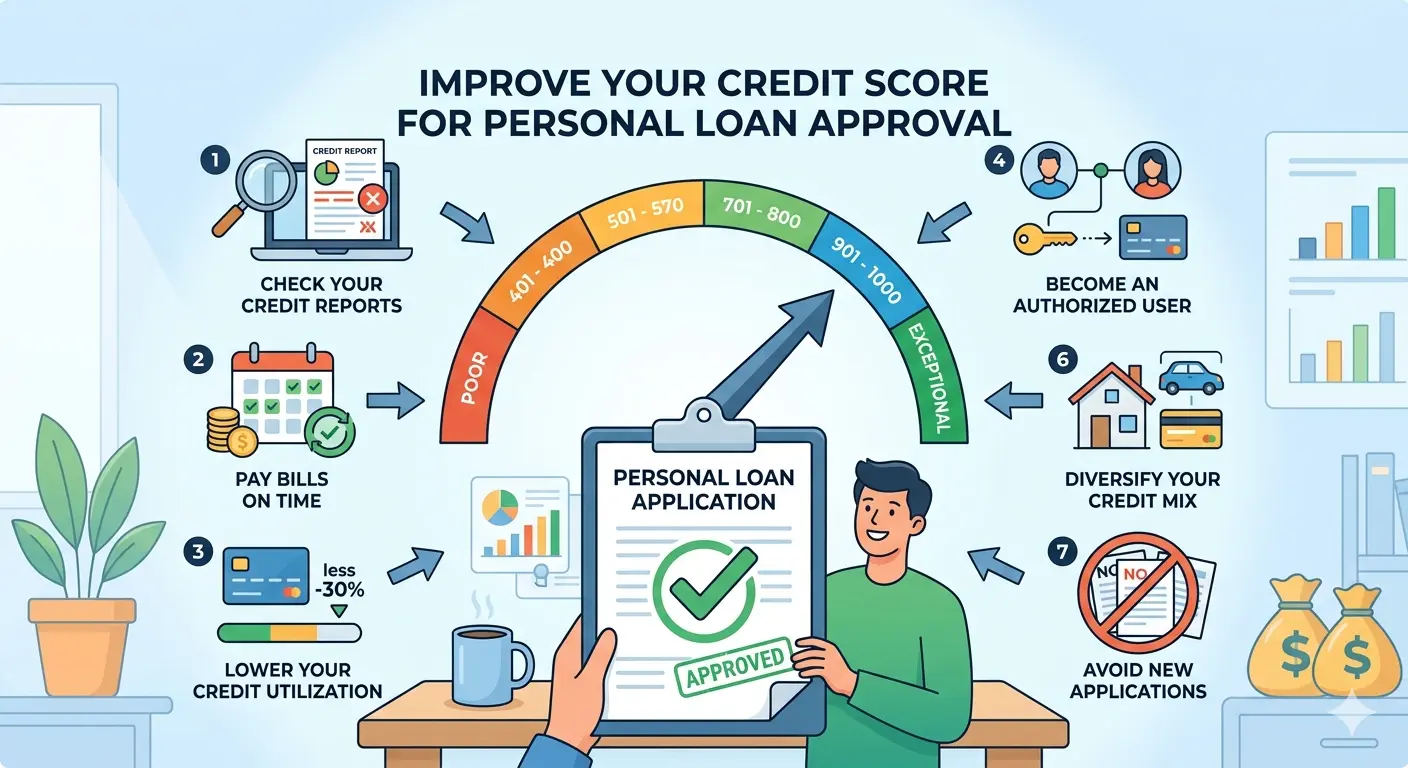
A high credit score is the key to unlocking fast personal loan approvals and lower interest rates. If you’re planning to apply for funding soon, your credit profile needs to be in top shape.
While improving your score takes time, following a strategic approach can speed up the process. This guide covers the most effective ways to boost your creditworthiness and secure the best loan terms available in 2026.
Quick Summary for Fast Results
If you’re in a hurry, focus on these high-impact steps:
- Fix Errors: Dispute inaccuracies on your credit report immediately.
- Reduce Utilization: Keep credit card balances below 30% of your limit.
- Never Miss a Payment: Set up autopay to ensure a 100% on-time history.
- Become an Authorized User: Leverage a family member’s strong credit history.
- Avoid New Inquiries: Stop applying for new cards at least 6 months before your loan.
1. Audit Your Credit Reports for Errors

Credit bureaus often make mistakes, such as listing a debt that isn’t yours or showing a late payment that you actually paid on time. These errors can drag your score down by dozens of points.
- The Fix: Request a free report from Equifax, Experian, or TransUnion. If you find a mistake, file a dispute online. Removing a single negative mark can provide a rapid boost.
2. Lower Your Credit Utilization Ratio
Your credit utilization—the amount of credit you use compared to your total limit—accounts for 30% of your score. Lenders view high balances as a sign of financial stress.
- The Strategy: Aim to keep your utilization under 30%. For example, if your total limit is $10,000, keep your balance below $3,000. Paying down your cards before the statement closing date is a proven way to jumpstart your score.
3. Build a Flawless Payment History
Payment history is the single most important factor, making up 35% of your total score. Even one missed payment can stay on your report for seven years.
- Pro Tip: Set up automatic payments for at least the minimum amount due. If you’ve missed a payment recently, call the creditor and ask for a “goodwill deletion” in exchange for setting up a payment plan.
4. Become an Authorized User
If you have a trusted family member with an excellent credit history and an old credit card, ask them to add you as an authorized user.
- Why it works: Their years of perfect on-time payments will be reflected on your report, instantly increasing your average account age and improving your score without you even needing to spend a dime.
5. Keep Old Accounts Open

Length of credit history matters. When you close an old credit card, you shorten your average account age and reduce your total available credit, which can hurt your score.
- Advice: Keep your oldest cards open, even if you don’t use them frequently. Use them for a small purchase once every few months to keep the account active.
6. Diversify Your Credit Mix
Lenders like to see that you can manage different types of debt, including revolving credit (credit cards) and installment loans (auto loans, student loans).
- The Benefit: A diverse credit mix accounts for 10% of your score. If you only have credit cards, consider a small “credit-builder loan” to show lenders you can handle fixed monthly payments.
7. Avoid Hard Inquiries Before Applying
Every time you apply for a new credit card, a “hard inquiry” is recorded, which temporarily lowers your score. Multiple inquiries in a short period make you look desperate for cash.
- The Rule: Avoid applying for any new credit at least 3 to 6 months before you submit your personal loan application.
The Hidden Factor: Debt-to-Income (DTI) Ratio
Even with a 750+ credit score, a bank might reject you if your Debt-to-Income (DTI) ratio is too high. Lenders want to ensure that your monthly debt payments don’t exceed 35–43% of your gross monthly income. Lowering your existing debt before applying for a personal loan is just as important as raising your score.
Final Thoughts
Improving your credit score is a marathon, not a sprint. By auditing your reports, keeping your balances low, and ensuring on-time payments, you’ll position yourself as a low-risk borrower. This not only guarantees loan approval but saves you thousands of dollars in interest over the life of the loan.
Frequently Asked Questions
No, checking your own credit score is considered a “soft inquiry” and has zero impact on your credit rating. You can monitor it as often as you like through official channels.
Most people see a noticeable change within 3 to 6 months of consistent positive habits. However, correcting errors on your report can show results in as little as 30 days.
Yes, paying off collections is beneficial. For the best impact, try to negotiate a “pay for delete” agreement where the collector agrees to remove the negative mark from your report once paid.